
Header bidding is commonly used to maximize publisher revenue in programmatic advertising. Market Intelo states that the global header bidding platform market is valued at $1.8 billion in 2025 and is expected to reach $5.2 billion by 2034, representing a CAGR of 13.5% throughout the forecast period.
Many publishers think that implementing header bidding is enough. However, they unknowingly make configuration and optimization mistakes. These slips can:
- Reduce competition
- Increase latency
- Hurt user experience
- Leave significant revenue on the table
And I’m sure you wouldn’t want that. Whether you’re using Prebid.js, working with multiple Supply Side Platforms (SSPs) and Demand Side Platforms (DSPs), or managing a complex header bidding setup, avoiding these common pitfalls can dramatically improve ad revenue optimization.
In this blog, we’ll cover the 10 most common header bidding mistakes that cost publishers money and explain exactly how to fix each one.
| Quick Summary: Header bidding helps publishers maximize ad revenue, but poor implementation can reduce CPMs and hurt performance. Common mistakes include incorrect bid timeouts, excessive demand partners, outdated wrappers, high ad latency, and poor bid optimization. Regular monitoring, Prebid.js updates, and continuous yield optimization improve publisher revenue and programmatic advertising performance. |
Key Takeaways
- Header bidding increases competition among demand partners, helping publishers maximize ad revenue and CPMs.
- Poor configurations, such as incorrect bid timeouts, excessive SSPs, or outdated wrappers, can reduce publisher revenue.
- Optimizing Prebid.js, bid requests, viewability, fill rate, and ad latency leads to stronger programmatic monetization.
- Regular monitoring of bid density, auction performance, and demand partner quality is essential for sustainable yield optimization.
- Header bidding should be treated as an ongoing optimization process rather than a one-time implementation.
What is Header Bidding?
Header bidding is a programmatic advertising technique that allows multiple DSPs to bid on a publisher’s ad inventory simultaneously before the ad server selects a winner. This real-time auction:
- Increases competition
- Improves CPMs
- Enhances yield optimization
- Helps publishers maximize ad revenue.
10 Common Header Bidding Mistakes (With Solutions)
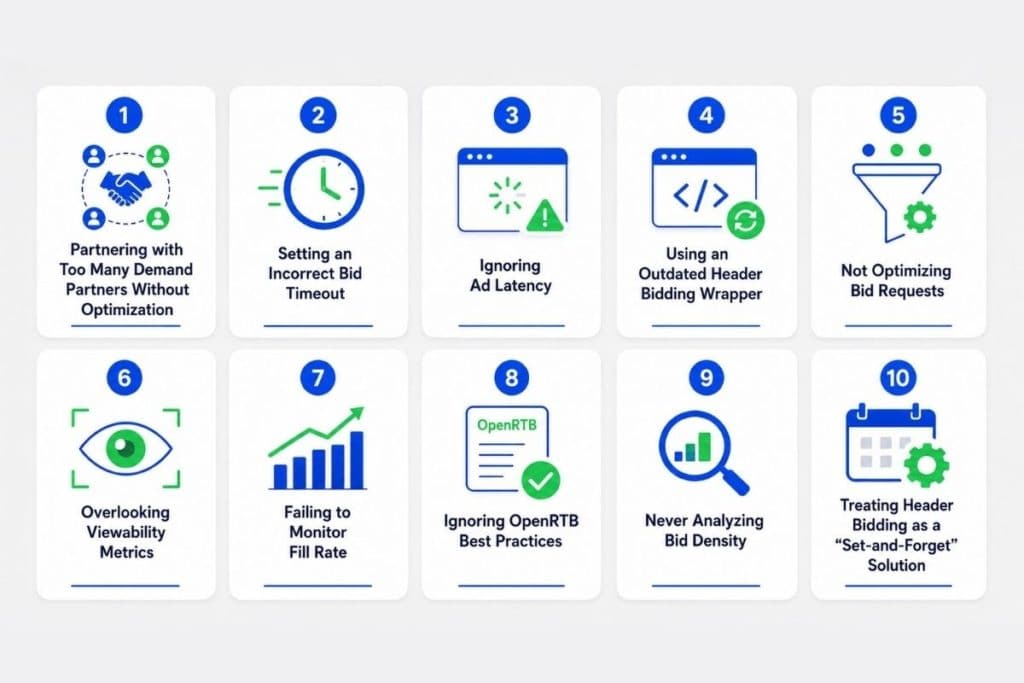
Partnering with Too Many Demand Partners Without Optimization
Many publishers assume that adding more demand partners automatically increases revenue. They usually use 3 to 8 SSPs. In reality, too many SSPs create duplicate bid requests, increase browser workload, slow down auctions, and reduce page performance. Several partners may also bid on the same inventory through identical buying paths, creating unnecessary duplication.
Why It Costs Money
- Higher ad latency
- Slower auctions
- Lower viewability
- Reduced user engagement
- Diminishing CPM gains
Solution
Instead of maximizing partner count, focus on maximizing bid quality.
Regularly evaluate:
- Win rate
- Bid density
- Revenue contribution
- Response time
- Fill rate
Keep only partners that consistently add incremental value.
Setting an Incorrect Bid Timeout
The bid timeout determines how long the browser waits for bids before the auction closes. A timeout that’s too short prevents slower bidders from participating. A timeout that’s too long delays page rendering and hurts user experience.
Why It Costs Money
Poor timeout settings lead to:
- Missed bids
- Lower auction competition
- Reduced CPM optimization
- Increased bounce rates
Solution
Continuously test your auction timeout. Most publishers find optimal performance between 700–1200 milliseconds, but the ideal value depends on geography, device type, and network conditions.
Monitor:
- Bid response rates
- Auction completion
- Revenue per impression
- Page speed
Ignoring Ad Latency
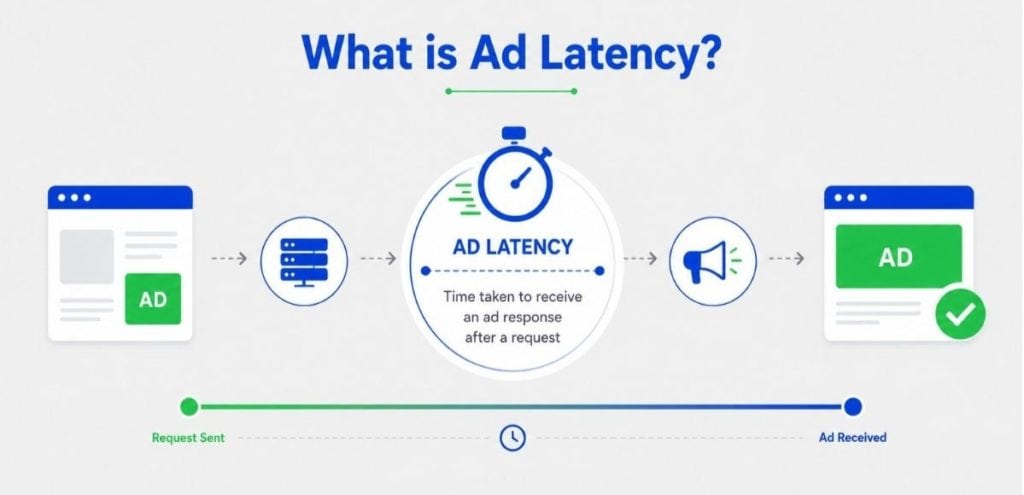
One of the biggest hidden revenue killers is excessive ad latency. Every additional script, auction participant, or poorly optimized wrapper increases load time.
Why It Costs Money
High latency negatively impacts:
- User experience
- Viewability
- Search rankings
- Session duration
- Overall publisher revenue
Solution
Reduce latency by:
- Removing underperforming SSPs
- Compressing scripts
- Lazy loading below-the-fold ads
- Optimizing asynchronous loading
- Monitoring wrapper performance
Faster pages generally produce higher long-term monetization.
Using an Outdated Header Bidding Wrapper
Your header bidding wrapper is responsible for managing auctions and bidder communication. Older wrappers often lack modern optimization capabilities, security updates, and auction improvements.
Why It Costs Money
Outdated wrappers may:
- Delay auctions
- Produce inconsistent bid handling
- Increase JavaScript execution time
- Limit new monetization features
Solution
Use actively maintained wrappers like Prebid.js and update them regularly. Modern wrapper versions improve:
- Auction efficiency
- Bid management
- Analytics
- Performance
- Compatibility with new demand partners
Not Optimizing Bid Requests
Poorly configured bid requests reduce buyer confidence. Missing user signals, inaccurate ad sizes, or incomplete inventory information can discourage bidding.
Why It Costs Money
Weak bid requests often result in:
- Lower CPMs
- Reduced competition
- Lower fill rates
- Less advertiser demand
Solution
Ensure every request contains:
- Accurate ad dimensions
- Device information
- Consent signals
- User segmentation (where permitted)
- Inventory metadata
Better request quality improves participation across the Ad Exchange ecosystem.
Overlooking Viewability Metrics
Many publishers optimize purely for impressions while ignoring viewability. Advertisers increasingly prioritize inventory that users actually see.
Why It Costs Money
Low viewability reduces:
- Bid prices
- Advertiser demand
- Premium campaign eligibility
- Long-term revenue
Solution
Improve viewability by:
- Placing ads above the fold strategically
- Reducing layout shifts
- Optimizing lazy loading
- Improving page speed
- Testing different ad positions
Higher viewability almost always leads to stronger bidding competition.
Failing to Monitor Fill Rate
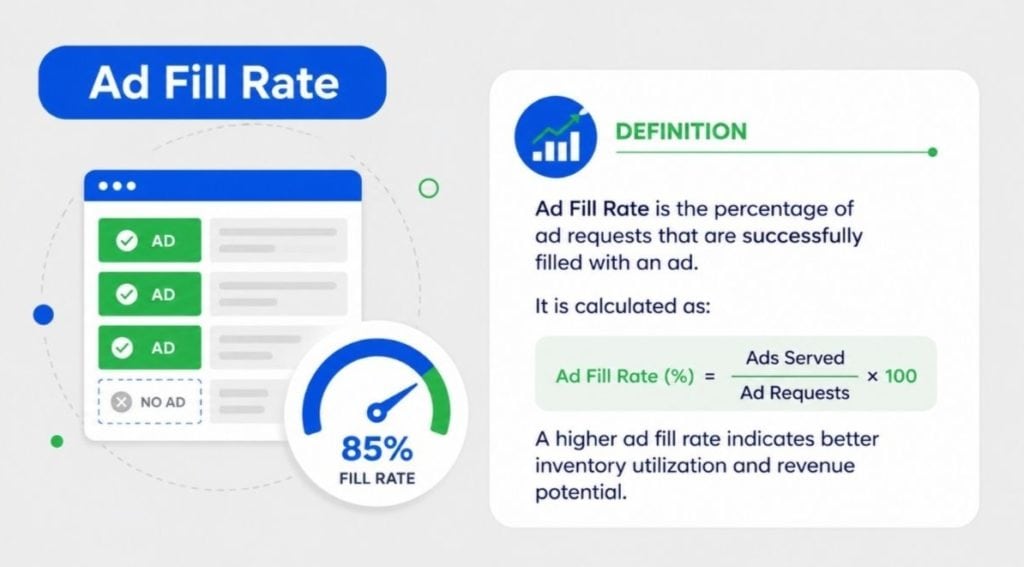
A healthy fill rate ensures available inventory gets monetized consistently. Many publishers only monitor CPM while ignoring how much inventory remains unsold.
Why It Costs Money
Low fill rates mean:
- Lost impressions
- Lower overall revenue
- Underutilized inventory
Solution
Track fill rate alongside:
- CPM
- Revenue per session
- Bid density
- Win rate
- Demand partner performance
Balanced optimization consistently outperforms CPM-only strategies.
Never Analyzing Bid Density
Many publishers monitor revenue but ignore bid density, the average number of bids received per auction. Low bid density usually indicates weak competition.
Why It Costs Money
Less competition often means:
- Lower CPMs
- Fewer winning bids
- Reduced auction efficiency
Solution
Regularly evaluate:
- Bids per auction
- Active bidders
- Win rates
- Response times
Optimize your partner mix to maximize meaningful competition rather than simply increasing bidder count.
Ignoring OpenRTB Best Practices
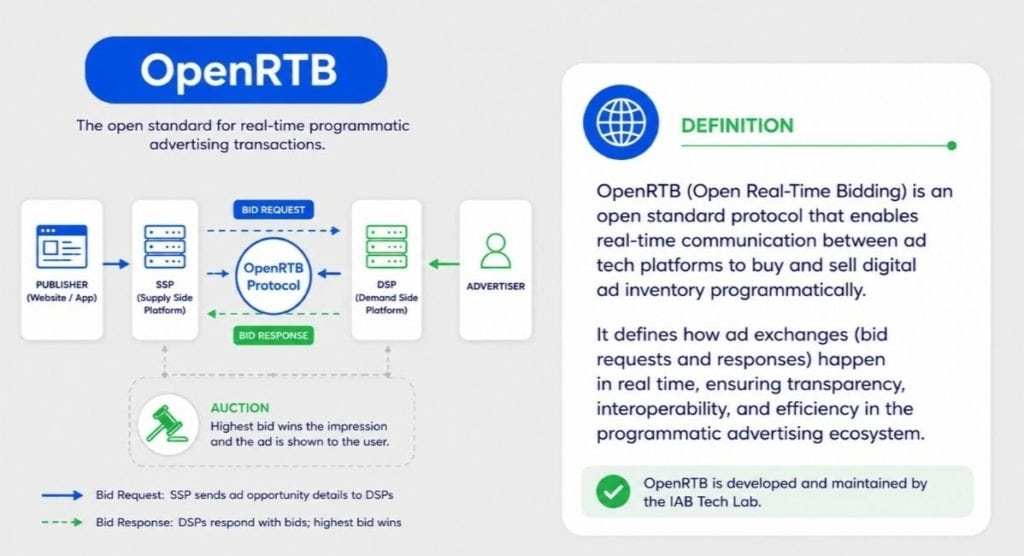
Many publishers overlook evolving OpenRTB standards. Incomplete or outdated implementations reduce compatibility with buyers.
Why It Costs Money
Poor compliance leads to:
- Lower bid participation
- Reduced auction quality
- Missed premium demand
Solution
Keep your implementation aligned with the latest OpenRTB specifications.
Ensure:
- Standardized request formatting
- Proper auction signaling
- Updated bidder adapters
- Accurate inventory declarations
This improves participation across the broader Real-Time Bidding (RTB) ecosystem.
Treating Header Bidding as a “Set-and-Forget” Solution
The biggest mistake is assuming the initial header bidding setup will remain optimal forever. The programmatic ecosystem changes constantly.
- New DSPs emerge.
- SSPs change auction behavior.
- Buyer demand fluctuates.
- Privacy regulations evolve.
Why It Costs Money
Without continuous optimization, publishers gradually experience:
- Revenue decline
- Lower competition
- Reduced fill rates
- Stagnant CPMs
Solution
Successful programmatic monetization requires ongoing yield optimization.
Conduct regular audits of:
- Demand partner performance
- Wrapper updates
- Auction timeout
- Bid timeout
- Viewability
- Latency
- CPM trends
- Fill rates
- Ad inventory quality
Continuous testing consistently produces better long-term revenue than static configurations.
Header Bidding Mistakes at a Glance
Here’s a tabular representation of header bidding mistakes in a concise format for better understanding.
| Mistake | Business Impact | Recommended Solution |
| Too many demand partners | Increased ad latency, duplicate bid requests, lower page performance | Retain only high-performing SSPs based on bid quality and revenue contribution. |
| Incorrect bid timeout | Missed bids or slow page loads | Test and optimize auction timeout (typically 700–1200 ms). |
| Ignoring ad latency | Lower viewability, higher bounce rates, reduced revenue | Optimize scripts, lazy load ads, and remove slow bidders. |
| Using an outdated header bidding wrapper | Slower auctions and missed optimization features | Keep Prebid.js or your wrapper updated with the latest releases. |
| Poorly optimized bid requests | Lower CPMs and weaker advertiser demand | Include accurate inventory, device, consent, and user signals. |
| Ignoring viewability | Reduced advertiser demand and lower bid prices | Improve ad placement, page speed, and layout stability. |
| Not monitoring fill rate | Unsold ad inventory and lost revenue | Track fill rate alongside CPM, bid density, and win rate. |
| Ignoring OpenRTB standards | Lower bid participation and auction quality | Follow the latest OpenRTB specifications and update bidder adapters. |
| Not analyzing bid density | Reduced auction competition | Regularly evaluate bids per auction and optimize demand partners. |
| Treating header bidding as “set and forget” | Gradual revenue decline over time | Continuously audit your setup, wrappers, SSPs, and performance metrics. |
In The End
No doubt, header bidding has changed programmatic advertising, but simply implementing it doesn’t guarantee higher revenue. Small configuration mistakes, outdated technology, and poor optimization practices can quietly reduce earnings month after month.
By avoiding these ten common mistakes, you can create a healthier auction environment, improve competition among Demand Side Platforms (DSPs) and Supply Side Platforms (SSPs), increase CPM optimization, and maximize the value of every piece of ad inventory.
Regular performance analysis, continuous testing, and data-driven improvements are the foundation of sustainable publisher revenue growth in the Ad Tech landscape.
If you’re looking to improve auction performance, optimize your header bidding stack, and maximize long-term yield, investing in continuous optimization will always outperform a “set it and forget it” approach.
Frequently Asked Questions
1. What is header bidding, and why is it important for publishers?
Header bidding is a programmatic advertising technique that lets multiple demand partners bid on the same ad impression before the ad server makes a decision. This increases competition, improves CPMs, boosts fill rates, and helps publishers maximize revenue from their ad inventory while reducing reliance on a single demand source.
2. How many SSPs should a publisher include in a header bidding setup?
There’s no universal number, but most publishers perform best with three to eight well-optimized SSPs. Instead of adding more demand partners, focus on their bid quality, response time, win rate, and revenue contribution to avoid duplicate bids, higher latency, and unnecessary auction complexity.
3. What is the ideal bid timeout for header bidding?
The ideal bid timeout typically ranges between 700 and 1,200 milliseconds, depending on user location, device type, and network speed. Regular testing helps publishers balance auction competition with page performance, ensuring maximum revenue without increasing ad latency or harming the user experience.
4. Why is Prebid.js widely used for header bidding?
Prebid.js is the most popular open-source header bidding wrapper because it supports multiple SSPs, offers flexibility, frequent updates, extensive bidder integrations, and detailed analytics. It helps publishers manage auctions efficiently while improving transparency, performance, and overall programmatic monetization.
5. How can publishers optimize header bidding for higher revenue?
Publishers should regularly monitor bid density, fill rate, viewability, auction timeout, ad latency, and demand partner performance. Updating the header bidding wrapper, optimizing bid requests, removing underperforming SSPs, and continuously testing configurations are key to improving CPMs, yield optimization, and long-term publisher revenue.







Best bet in the game right now. The odds are fair and the payout process is straightforward without any hidden stress. Cheers to ngfortebet for the great service.
I’ve been looking for a reliable spot to place my bets and this one really delivers. The interface is smooth and the payouts are fast. Definitely my new favorite sunbet10live
Honestly one of the best online gaming platforms I have encountered. The variety of options is amazing and everything feels very fair betjuegosonline
[3528]hpbet Official Login | সেরা অনলাইন ক্যাসিনো ও স্লট গেম,hpbet-এ আজই লগইন করে সেরা অনলাইন স্লট গেমের অভিজ্ঞতা নিন। বিকাশ দিয়ে টাকা জমা করে সহজেই খেলা শুরু করুন। অ্যাপটি ডাউনলোড করে এখনই জয়েন করুন। visit: hpbet
One of the most trustworthy sites I have come across. The promotions are generous and the overall experience is just seamless. pkdewa90
Really impressed with the game variety here. It is my go-to spot for relaxing and winning some extra cash. Visit idjuragan88 now.
Tried 41jiliph last night. Nothing bad, nothing super amazing either. The slots selection is okay. Maybe worth a try if you are bored. Go give it a try: 41jiliph
I always check here for the latest promos and game updates. It keeps me in the loop so I never miss a big jackpot opportunity. Thanks to phokbetupdate for the info.
What a refreshing gaming experience. I love how easy it is to navigate and the daily promotions actually make a real difference. It feels like a community that values its members rather than just another casino wrapper. pkrspinpk
Great variety of games and the community is really active. It is always nice to find a place that actually delivers on its promises. See you at jokerbolalink.
Just had a massive win on my favorite slot today! The graphics are crisp and the game loads fast on my phone. If you are looking for a lucky streak try winjiliph777.
[1481]leci123 | Login Resmi Link Alternatif Slot Gacor Terpercaya,leci123 menyediakan akses login resmi dan link alternatif aman. Nikmati judi casino online terpercaya dengan kemudahan deposit pulsa tanpa potongan. Daftar sekarang! visit: leci123
[8875]bet9ja লগইন এবং অ্যাপ ডাউনলোড | বিকাশ অনলাইন ক্যাসিনো,bet9ja লগইন করুন এবং সেরা অনলাইন স্লট গেম উপভোগ করুন। বিকাশ দিয়ে অনলাইন ক্যাসিনো পেমেন্ট সহজ করুন এবং আজই অ্যাপ ডাউনলোড করে শুরু করুন। visit: bet9ja
[1215]bt222 Login Philippines – Online Slots gamit ang GCash,Mag-bt222 login philippines para sa online slots gamit ang GCash. I-download ang bt222 app download APK at i-enjoy ang pinakamabilis na withdrawal na casino. visit: bt222
Super impressed with the customer support team, they answered my questions in minutes. The gameplay is fair and rewarding. okadaplaycasino is legit!
The login process is super smooth and I rarely encounter any glitches. It makes the whole gaming session much more enjoyable. Highly recommend 17jililogin to everyone.
I have tested dozens of betting circles over the years and this one stands out for its honest approach. The account verification took only a few minutes and now I can deposit and cash out without any drama. Truly a player first experience. tk888bet