
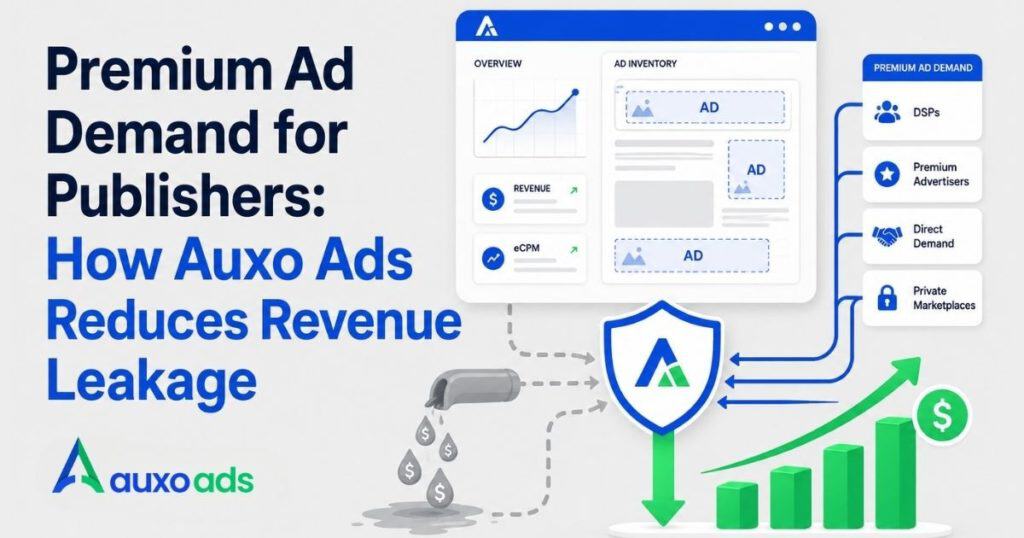
Accessing premium ad demand for publishers should increase revenue. But adding more demand sources does not automatically mean publishers earn more.
Revenue can still leak through inefficient auctions, weak demand competition, and incorrect pricing. On top of that iunauthorized selling paths, poor fill rates and fragmented ad operations can add to the problem.
For publishers, the real goal is therefore not simply more demand. It is better demand competing efficiently for every valuable impression.
That is where Auxo Ads helps publishers build a stronger monetization ecosystem.
Key Takeaways
- Premium demand works best with strong auction competition.
- Better yield requires balancing CPM and fill rate.
- Revenue leakage can occur across multiple programmatic touchpoints.
- Cleaner supply paths can improve transparency and buyer confidence.
- Auxo Ads helps publishers optimize demand, yield and monetization efficiency.
What Does Premium Ad Demand Mean for Publishers?
Premium ad demand refers to advertiser demand that has the potential to deliver stronger CPMs and better-quality campaigns. It also involves greater competition for publisher inventory.
However, premium demand creates value only when it competes effectively.
If an impression worth $5 to one buyer is sold for $2 because that buyer never entered the auction, the publisher has lost potential yield even though the impression was successfully monetized.
This is why modern programmatic monetization needs to optimise both demand access and auction efficiency.
Why Do Publishers Lose Revenue in Programmatic Advertising?
Programmatic revenue leakage rarely comes from one obvious problem. It often happens across several small inefficiencies in the supply chain.
The scale of the broader problem is significant. The Association of National Advertisers found that as much as 23% of the $88 billion invested in open-web programmatic media could be classified as waste.
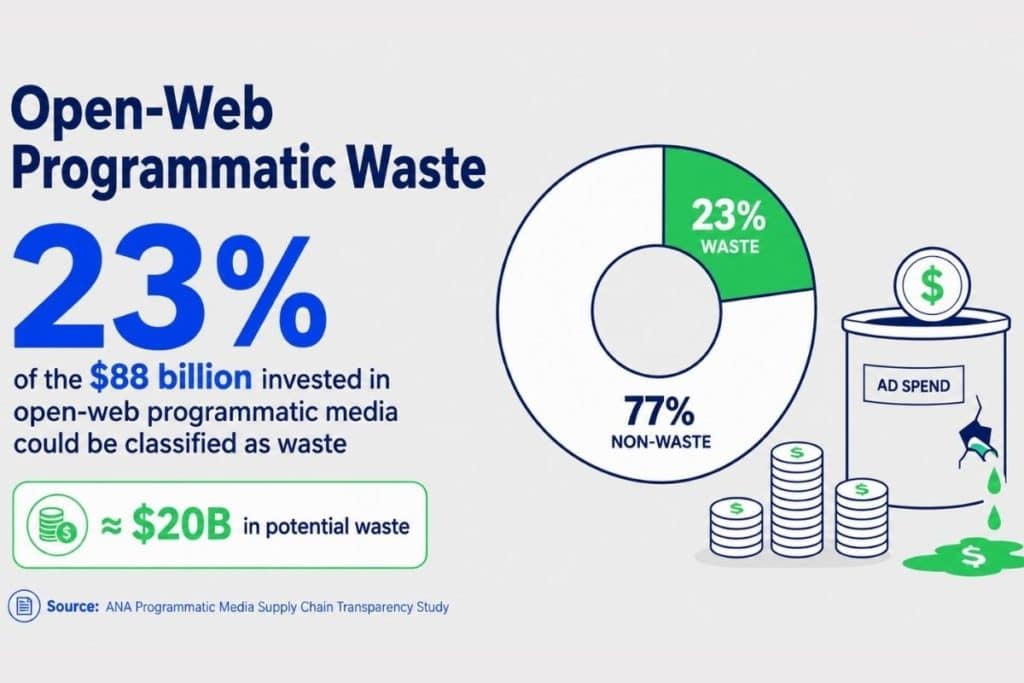
While this figure measures advertiser-side inefficiency rather than direct publisher loss, it shows how fragmented supply paths can reduce overall programmatic efficiency.
Publishers may experience similar monetization inefficiencies when demand sources do not compete properly, pricing rules are poorly configured, inventory is sold through unnecessary intermediaries or valuable impressions remain unfilled.
Poor Auction Competition
Sequential waterfalls can allow an impression to be sold before a higher-value buyer gets the opportunity to bid.
By contrast, unified competition lets eligible demand sources compete closer to the same time. Google explains that dynamic allocation is specifically designed to increase publisher yield by letting non-guaranteed demand compete against other eligible inventory opportunities without compromising guaranteed delivery.
Incorrect Pricing Decisions
Setting floors too high can damage fill rate. Setting them too low can suppress CPM.
The objective should therefore be publisher yield optimization, not simply achieving the highest possible CPM.
Google’s own target CPM documentation provides an illustrative example in which changing from a fixed $2 floor to a $2 target CPM generated 95% more revenue, despite the average CPM falling slightly, because more impressions were successfully monetized.
This is an example rather than a universal revenue benchmark, but it demonstrates why yield must be evaluated across CPM and fill together.
How Does Auxo Ads Help Publishers Access Better Demand?
Premium ad demand for publishers can be achieved with the help of Auxo Ads.
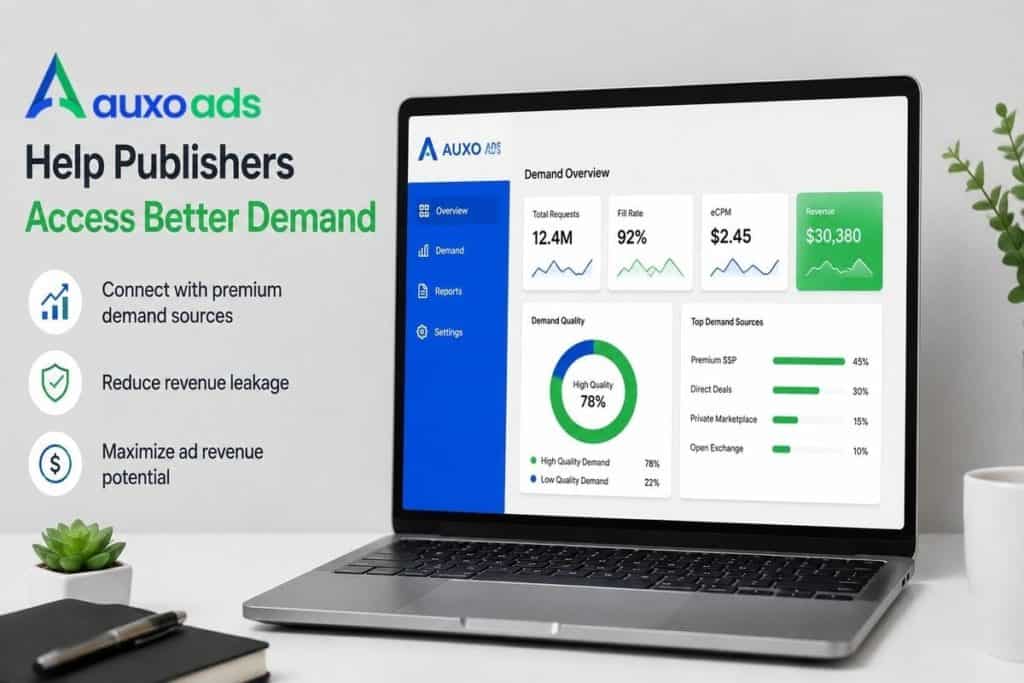
Auxo Ads approaches monetization as an interconnected system rather than simply adding another source of advertising demand.
It combines enterprise-grade ad serving and access to established programmatic buying ecosystems. It also incorporates advanced demand competition and publisher-focused optimization to create more opportunities for valuable inventory to receive competitive bids.
Increasing Demand Competition
Auxo Ads helps publishers create competition between multiple qualified demand channels rather than depending too heavily on one monetization route.
Through technologies such as header bidding optimization and unified auctions, more eligible buyers can compete for inventory before an impression is allocated.
More competition does not guarantee higher revenue for every impression. However, it improves the publisher’s opportunity to discover the true market value of inventory.
How Does Auxo Ads Reduce Revenue Leakage?
The key difference is that Auxo Ads focuses on what happens after demand is connected.
Smarter Yield and Fill Rate Optimization
Auxo Ads evaluates monetization performance across CPM, fill rate, inventory quality and overall revenue rather than optimizing one metric in isolation.
This helps publishers identify situations where a higher floor may actually reduce revenue or where additional competition could improve monetization.
Cleaner Supply Paths
Publishers also need to know who is authorized to sell their inventory.
IAB Tech Lab states that incorrect or missing ads.txt entries can result in missed revenue opportunities. Hence authorized-seller standards help publishers prevent counterfeit inventory and increase supply-chain transparency.
Supply path quality is becoming increasingly important to buyers as well. For publishers, maintaining cleaner and more transparent paths can therefore make inventory easier for quality buyers to trust and purchase.
Continuous Ad Revenue Optimization
Programmatic performance changes with geography, device, seasonality, advertiser demand and audience behaviour.
Auxo Ads helps publishers continuously analyse these changes and adjust monetization strategies instead of treating ad setup as a one-time exercise.
This includes identifying underperforming inventory, reviewing demand performance, improving auction configuration and finding opportunities where existing traffic can generate stronger returns.
Why Choose Auxo Ads for Publisher Monetization?
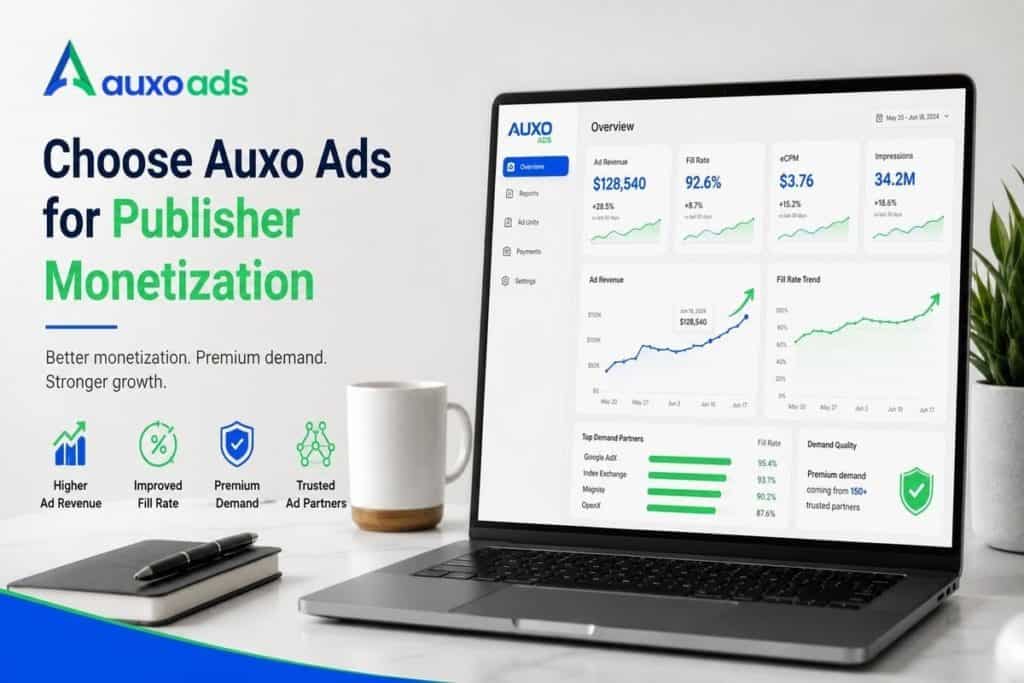
To have premium ad demand for publishers doesn’t necessarily need more ad-tech platforms. They need their existing inventory and demand ecosystem to work more efficiently together.
Auxo Ads combines monetization technology with hands-on programmatic expertise to help publishers improve demand competition, reduce unnecessary revenue leakage and make more informed yield decisions.
CyberMedia, the company behind Auxo Ads, also achieved Google Certified Publishing Partner status in 2026. It is a certification Google describes as being awarded to companies vetted for their publishing-product expertise and track record of helping publishers succeed.
For publishers and AdTech teams, this creates a model centred on quality demand, transparent monetization and sustainable revenue growth rather than simply adding more bidders.
Turn Every Impression Into a Better Revenue Opportunity
Premium demand matters. But the way that demand reaches, competes for and ultimately wins publisher inventory matters just as much.
Auxo Ads helps publishers build stronger demand competition, optimise yield, improve fill and identify revenue leakage across their programmatic monetization setup.
Your traffic already has value. Make sure your monetization stack captures more of it.
Explore Auxo Ads and discover how to strengthen your publisher monetization strategy
Want More Publisher Revenue Insights?
Better monetization starts with understanding what is changing across programmatic advertising, yield optimization, privacy, video and publisher technology.
Stay ahead of the next shift instead of reacting to it.
Visit the Auxo Ads Blog for practical publisher insights and subscribe to the newsletter
Frequently Asked Questions
1. What is premium ad demand for publishers?
Premium ad demand comes from high-quality advertisers and established buying platforms that compete for publisher inventory, potentially improving CPMs, fill rates, and overall programmatic revenue when auctions are optimized effectively.
2. How does Auxo Ads help reduce publisher revenue leakage?
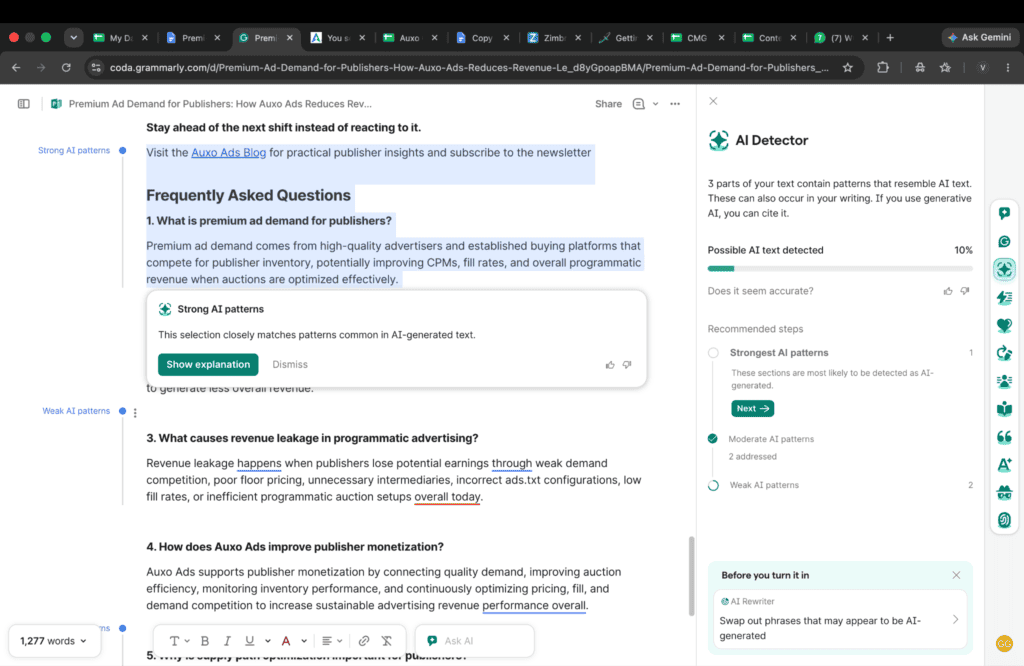
Auxo Ads helps publishers improve auction competition, optimize yield and fill rates, strengthen supply paths, and reduce inefficient monetization practices that can cause valuable impressions to generate less overall revenue.
3. What causes revenue leakage in programmatic advertising?
Revenue leakage happens when publishers lose potential earnings through weak demand competition, poor floor pricing, unnecessary intermediaries, incorrect ads.txt configurations, low fill rates, or inefficient programmatic auction setups overall today.
4. How does Auxo Ads improve publisher monetization?
Auxo Ads supports publisher monetization by connecting quality demand, improving auction efficiency, monitoring inventory performance, and continuously optimizing pricing, fill, and demand competition to increase sustainable advertising revenue performance overall.
5. Why is supply path optimization important for publishers?
Supply path optimization helps publishers create cleaner, more direct routes between inventory and buyers, improving transparency, reducing unnecessary intermediaries, increasing buyer confidence, and potentially strengthening overall programmatic monetization performance significantly.
(only for reference)







Playing on vn123win79 gives me that lucky feeling every single session. The weekly reload bonus fits perfectly with my schedule and customer service never leaves me hanging. A dependable platform that treats regular players like royalty vn123win79
The VIP treatment is real! The rewards and the exclusive games make the whole experience feel premium. Join the club at betbatvip
Love the variety of games here. It is such a fun way to relax and maybe make some extra cash at slotgembiralogin.
Hey locals, 99jl has been my secret weapon for stress free gaming sessions lately. The app glides smoothly on budget phones and the daily login rewards actually make a real difference. I highly suggest giving it a try if you want a honest and chill platform. 99jl
I love how fast the withdrawals are processed. No more waiting for days to get my winnings. Truly a professional service. pkcz777gamelogin
The registration process was a breeze and I was able to start playing within minutes. Great for newcomers who want a quick start at okfunphsignup.
Solid platform with a very fair system. I really appreciate the customer support team for helping me out with my account setup quickly. Give pkzk888 a shot if you want a stress free game.
The graphics are top notch and the gameplay is just addictive. I’ve won a couple of times already today! Check out phperyaplus if you want some real excitement.
Finally found a site that doesn’t lag during big wins. The interface is super clean and easy to navigate. I highly recommend phtaya09 to everyone.
Great vibes and an awesome collection of slots. I spend most of my free time exploring phtaya07 now.
The installation process was a breeze and the app runs perfectly on my phone without any lag. Definitely the best way to get the game via wa777gamedownloadapk.
Fast deposits and even faster withdrawals. That is all I care about and this site delivers perfectly. Big thanks to phj8jili.