
If you’ve ever invested in a display campaign only to see the CTR flatline, you’ve likely experienced banner blindness. You may not have known the name, but you’ve felt its impact.
Rarely discussed and often unnoticed, Banner blindness can quietly drain ROAS for ad distributors, buyers, and marketing departments. To reverse stagnant performance, understanding its causes and consequences is crucial.
This article breaks down:
- What banner blindness is
- What the research tells us
- Why do users develop it?
- How it interacts with ad fatigue to compound the damage
- What you can do to fight back.
What Is Banner Blindness?
Banner blindness is a selective attention phenomenon in which internet users, consciously or unconsciously, ignore online advertisements, particularly banner ads. The phenomenon does not reflect the appeal of the ad itself.g.
The problem is that their focus is entirely on the content they came for, and banner ads sit completely outside their attention. Banner blindness can occur even when the ad contains information the visitor is looking for.
Alarming Banner Blindness Statistics
The most widely cited benchmark comes from an Infolinks study. It found that:
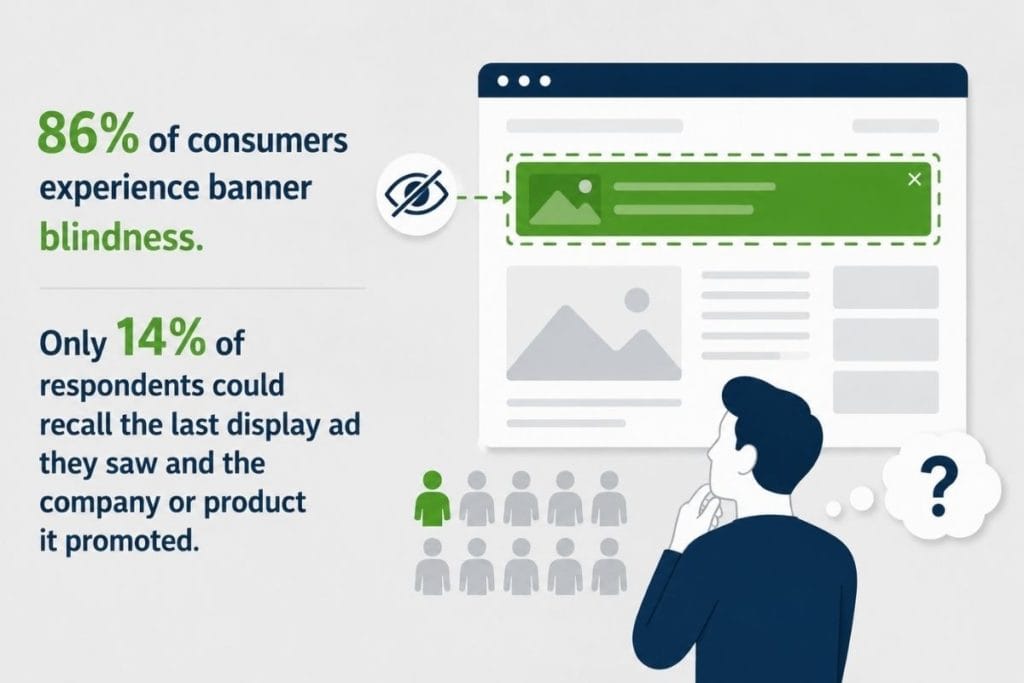
The CTR data backs this:
- In the early days of banner advertising, CTRs hovered around 1%. That figure has since collapsed to approximately 0.35%, with over 80% of users ignoring banner ads entirely.
- Some industry measurements place the CTR on standard banner formats even lower, at 0.05%.
Google found that 56% of display ads are never seen by humans. This is not due to ad blockers, but to placement and user scroll behavior. Another study said 41% of consumers tune out ads on social media, and 67% admit to banner blindness.
What the Numbers are Saying
Since the Infolinks study, no large-scale research has shown improvement. The research, industry data, and performance metrics all agree: banner blindness is real, widespread, and worsening.
The Psychology Behind Banner Blindness
To tackle banner blindness, we must understand that it is not just an ad creative or media placement problem. It comes from how people process information at the cognitive level.
Selective Attention and Cognitive Load
When people browse a website, their brain naturally focuses only on what seems important to their current goal. This is called selective attention. In a world full of information, the brain constantly filters out anything that doesn’t feel useful at that moment.
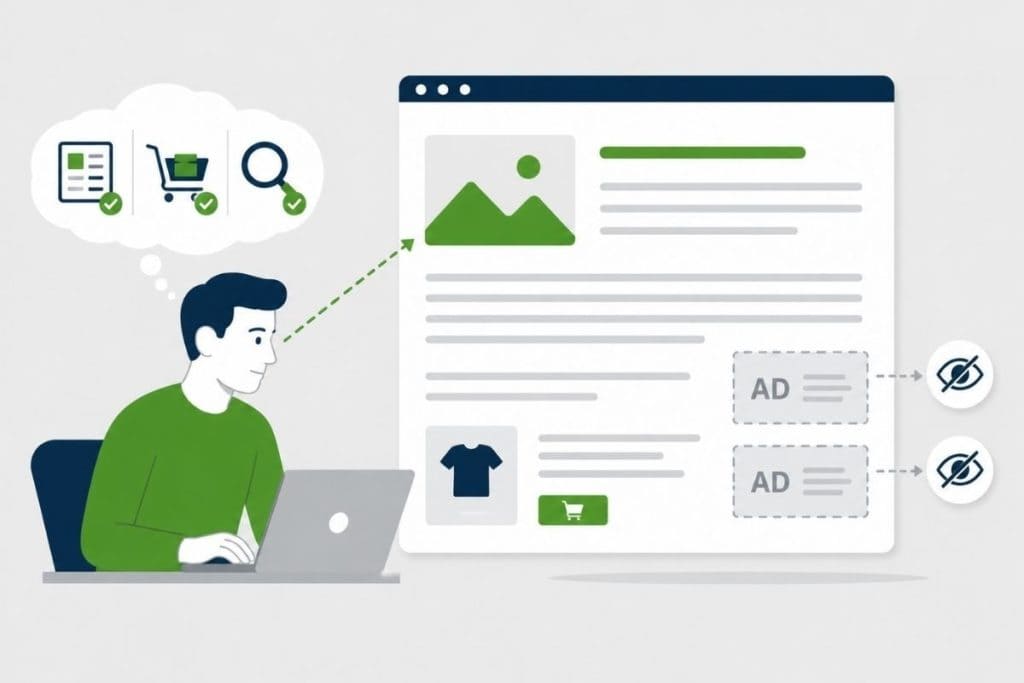
So, if a user visits a webpage to read an article, shop for a product, or find specific information, their attention automatically stays on those tasks. Elements that seem unrelated, like banner ads, are often ignored instantly.
Over time, people learn to spot common ad placements and designs. Because of this, the brain marks banner ads as “non-essential” almost instantly. These ads are filtered before the user even notices.
The Ad Schema: Pattern Recognition at Work
To process external information, the brain uses a cognitive schema, a mental model made through repeated experience and pattern recognition. After years of browsing, users develop a refined method for spotting ads.
This schema identifies standard ad dimensions, predictable screen positions, rectangular borders, and tags such as “Sponsored” or “Ad.” Anything matching this is automatically dismissed, requiring no human effort.
The F-Pattern: Where Eyes Actually Go
Eye-tracking studies from the Nielsen Norman Group have noted that users scan web pages in an F-shaped pattern:
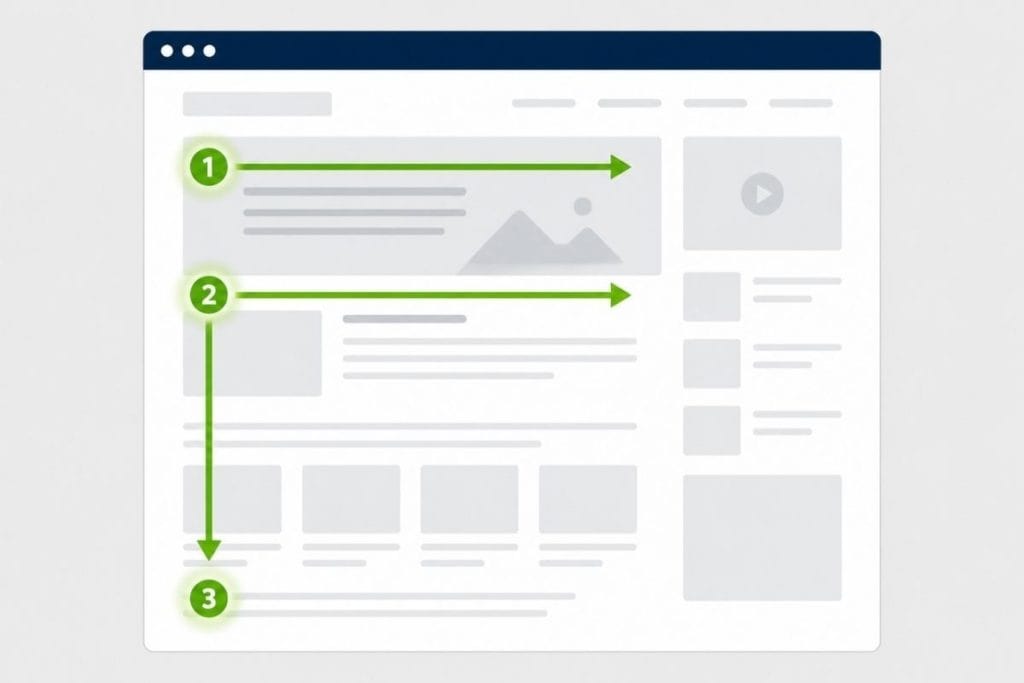
- A horizontal sweep across the top,
- Then a second sweep slightly lower, and
- Then a vertical scan down the left margin.
The right sidebar is one of the most used ad placements in digital ads. It largely falls outside the scan path. Another eye-tracking study showed banner blindness is strongest with right-side ads and goal-driven users.
Distrust and Learned Avoidance
Many users associate banner ads with spam, clickbait, or security risks. Past experiences with accidental clicks, dangerous redirects, or misleading ads have made users wary of banners.
Researchers found “banners with neutral valence were remembered better than negative and positive ones.” This suggests that making ads louder and more attention-grabbing can backfire.
Banner Blindness and Ad Fatigue: Two Forces, One Problem
Banner blindness and ad fatigue are often used interchangeably. However, they are not the same thing. They share consequences and reinforce each other, compounding the damage to ad performance.
The Fundamental Difference
| Banner Blindness | Ad Fatigue |
| Happens because users automatically ignore anything that looks like an ad. | Happens when users see the same ad too many times. |
| Related to the ad format and placement. | Related to the ad creative and repetition. |
| Users don’t consciously notice the ad. | Users notice the ad but lose interest in it. |
| Leads to ignored ads and wasted impressions. | Leads to lower engagement and negative feelings toward the brand. |
The Cycle of Customer Resentment: A Self-Laid Trap
When someone sees a banner ad for the first time, they may not even notice it because of banner blindness. If the same ad follows them for days through retargeting, the situation changes. What was ignored before now becomes something they notice and often find annoying.
Banner blindness makes users overlook ads at first. If exposure continues, ad fatigue and frustration follow, harming the user’s brand perception instead of helping it.
A survey found that intrusive ads and clutter considerably contribute to social media fatigue and a sense of being overwhelmed among users. These ultimately impair engagement and build ad avoidance.
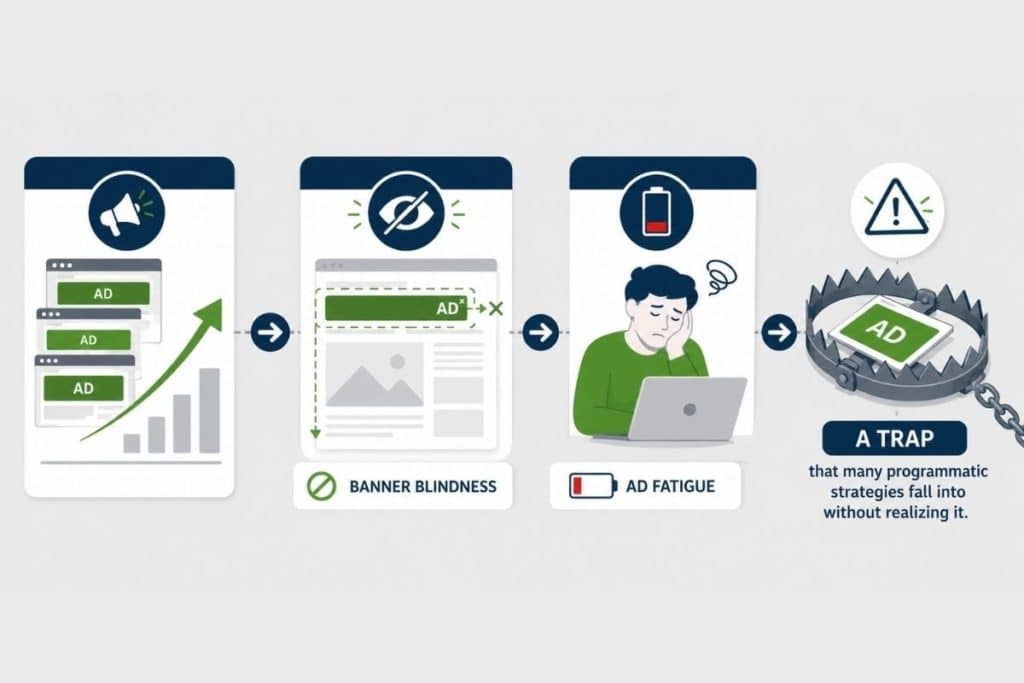
The more brands try to use frequency to break through banner blindness, the quicker they cause ad fatigue. Many programmatic strategies fall into this trap without realizing it.
How Banner Blindness Impacts Ad Performance and ROAS
Banner blindness is the silent killer of ad campaigns. It does not show up in standard statistics or analytics. It only reveals itself in sales numbers.
Misleading Metrics
For ad buyers and distributors, the cost of banner blindness is abstract. When on-screen ads go unseen, impression-based metrics become misleading. A campaign may show strong impressions, but if these land in banner-blind areas, there is little real attention. The effect appears in campaign metrics and revenue.
The CPM Spiral
For publishers on CPM models, banner blindness lowers the value of inventory over time. Advertisers, upon seeing poor engagement, discount banner placements reducing CPM rates overall.
This, in turn, pressures publishers to fill more of the page with ads, which accelerates blindness and further worsens engagement. It is a vicious cycle.
The Misconception of Cost
Misallocated budget is a major concern. Standard banners are cheap on a CPM basis. It’s easy to think high volume makes up for low engagement, but it rarely does.
Ads that never reach the user’s awareness make no impact. No amount of programmatic optimization changes this if the format triggers the brain’s dismissal.
The End of The Road
For brands, the downstream effects include wasted ad spend and inflated cost-per-acquisition. When ad fatigue joins in, there is measurable brand resentment among over-exposed audiences.
Strategies to Overcome Banner Blindness
Banner blindness can’t be fully removed, but it can be reduced. Take action: apply targeted changes to format, placement, creative strategy, and audience management.
Switch to Native Advertising
Native ads bypass the ad schema by blending into the surrounding content. Unlike standard banners, they use the platform’s visual language, typography, and tone. Hence, making them indistinguishable from editorial content at a glance.
Native ads are viewed 53% more than traditional display ads and can achieve CTRs 8 times those of standard banner formats. Paid Posts by The New York Times exemplify this perfectly.
Invest in Interactive and Rich Media Formats
Static banners trigger the ad schema fast. Interactive elements like quizzes, polls, expandable units, or videos require participation. They create a different user experience.
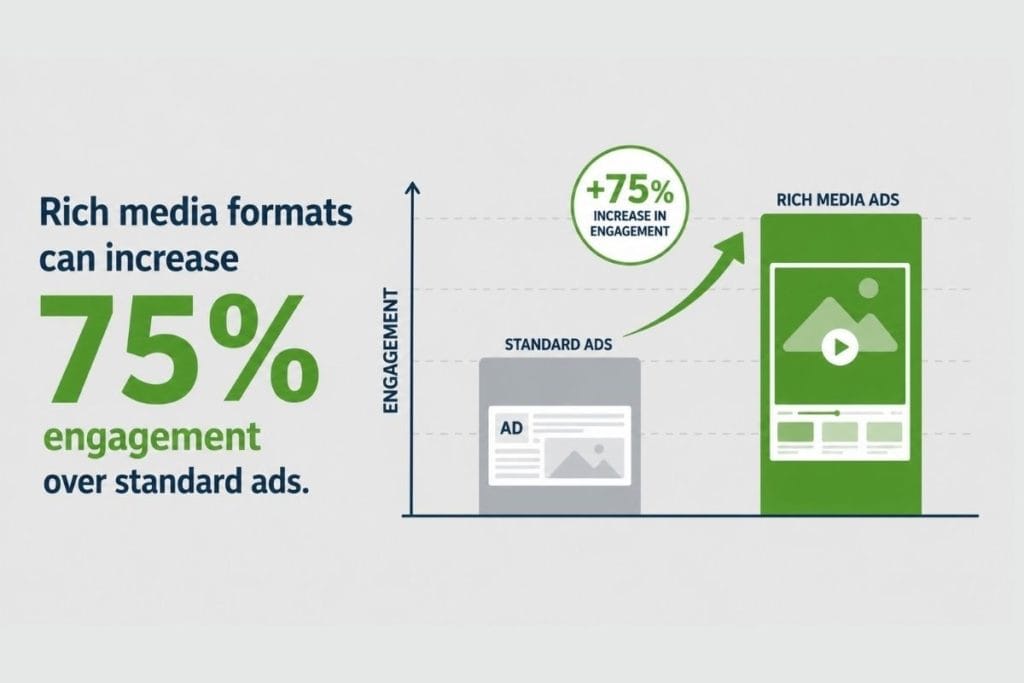
Rich media formats can boost engagement by 75% over standard ads. Click-to-Watch video formats are preferred over native video. Interaction shifts users from passive scrolling to active engagement. This breaks the habituated dismissal response.
Rethink Placement Based on Scan Patterns
People usually read web pages in an “F-shaped” pattern. Sidebar ads are often ignored and get little attention. Ads placed within the content do better as they fit the reading flow.
A 2024 study also found that in-article ads perform better than top-of-page banners, mainly because they are harder for users to overlook while reading.
Personalize Aggressively
Relevance is one of the few forces capable of breaking through a user’s attention filters. Audiences are far more likely to register and respond to ads that match their immediate interests. The more closely an ad speaks to what a user is currently thinking about, the more likely it is to interrupt the dismissal pattern.
Manage Frequency Ruthlessly
Because ad fatigue accelerates on top of banner blindness, impression frequency caps are essential. Serving the same creative to the same user more than a handful of times in a short window drives ad fatigue faster than any other factor. A programmatic strategy without frequency management is effectively spending a budget to manufacture resentment.
Rotate Creative Consistently
Even when frequency is capped, stale creative trains the ad schema faster. Users who see the same design repeatedly are simply reinforcing their pattern-recognition filters. Regular creative rotation avoids any single visual pattern from becoming the trigger for automatic dismissal.
A/B Test Everything and Iterate
No strategy works universally across all audiences, placements, or categories. Continuous A/B testing of placements, formats, and creative variables is the only reliable way to identify what is breaking through for a specific audience.
The goal is to find the combination of format and content that is surprising enough to register without being intrusive enough to trigger resentment.
The Future of Banner Advertising
The advertising industry is adapting to emerging technologies and related challenges, such as banner blindness, by moving towards new ways to create, deploy, and measure ads.
The Attention Economy
The ad industry is slowly realigning around a metric that banner blindness makes unavoidable: attention. Viewability has proven to be an insufficient proxy for impact. An ad can be viewable and simultaneously completely invisible to its audience.
Attention-based metrics, which measure the active dwell time a user spends on an ad, are gaining traction as a more honest measure of campaign value. This change has clear implications for:
- How inventory is priced,
- How campaigns are evaluated, and
- How budgets are allocated.
For distributors and buyers, understanding which placements and formats actually earn attention, rather than just delivery, will be the defining competitive advantage in the coming years.
Brand New Dynamics, Same Old Industry
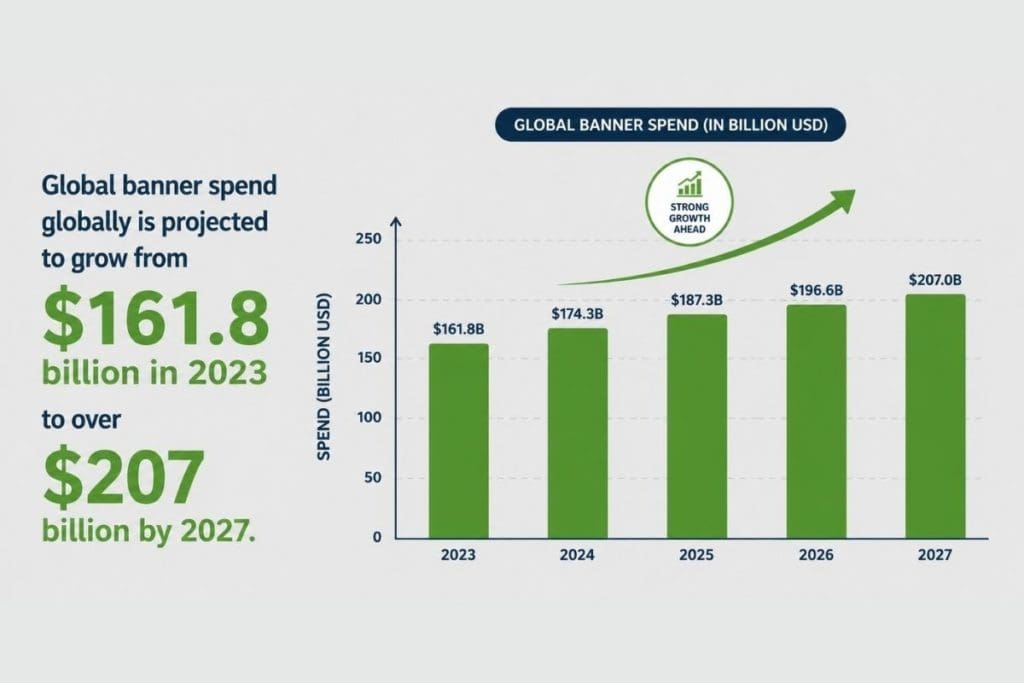
Global banner spend globally is projected to grow from approximately $161.8 billion in 2023 to over $207 billion by 2027. That money is not going away. What will change is where the performance lives within it, and the brands, buyers, and distributors who understand banner blindness will be best positioned to capture it.
Summing It Up
Banner blindness is not a bug in the system. It is a consequence of the industry’s traditional habits. For advertisers, it is an unpleasant truth, but also a clarifying one. The brands and buyers who perform in this environment are the ones spending smarter, not more.
They confirm that their formats earn attention rather than assume it, measure what users actually see rather than what gets delivered, and treat every impression as something that has to justify its place on the page.
Banner blindness will not disappear. But its grip on your campaign performance is not set in stone. Understanding it is the first step. Doing something about it is what counts.
Take Control of Your Ad Performance with Auxo Ads
Doing something about banner blindness requires the right data, the right tools, and the right expertise to act on what your campaigns are actually telling you.
Auxo Ads is trusted for smarter monetization and is especially built for the realities of modern digital advertising. We can help you find out exactly where attention is being lost and what to do about it.
Stay Ahead in AdTech
Want more insights like this? Visit the Auxo Ads Blog and stay updated with the latest strategies in programmatic advertising, revenue optimization, and user experience. Subscribe to our newsletter and never miss an update that will transform your ad revenue game.





The mobile app version is a game changer. I can play whenever I want without any lag. For the best mobile experience, you need 119betapp.
Really impressed with the security and speed of bitpkrgame. Everything feels professional and the gaming experience is top notch. Definitely my new go-to site.
Great community and a very friendly vibe. It feels more like a club than just a website. You should check out idbakso108
Really enjoying the selection of games here. Everything is well organized and the mobile version works like a charm. Check out phxgjili.
Managing my games on the go has never been easier thanks to this dedicated portal. The mobile version loads instantly and handles all my transactions securely. I rely on it for my favorite sports events and casino nights. Keep up the great momentum. 1xbetloginmobile
This place is a hidden gem! The jackpot hits are more frequent than other sites I have used. Check out phsz777asia now.
Finally a site that doesn’t lag during peak hours. The login process is quick and everything just works perfectly on my phone. I always use jili30login for my daily gaming sessions.
Had an amazing experience winning big here last weekend! The customer support was very helpful when I had questions about the withdrawal. Love vnhitclubwin.
Quick deposits and even quicker withdrawals. That is all I really care about and they nail it. I am sticking with jilicashslotlogin from now on.
Alright lads, so I’m looking for the latest 1xbet apk download. This website claims to have it. Anyone used 1xbetapkdownload before? Is it safe to download from there? Don’t want to end up with any dodgy software. Let me know! Download it yourself: 1xbetapkdownload
My friends recommended this place before our weekend tournament and I ended up staying longer than expected. The promotions are fair and customer service responds in minutes without any hassle. I feel like a regular here and that means everything to me pekingbet
[4724]megapari লগইন ও অ্যাপ ডাউনলোড | বিকাশ ডিপোজিট ও ক্যাসিনো গেম,megapari login কিভাবে করে তা জানুন এবং app download link পান। বিকাশ দিয়ে অনলাইন ক্যাসিনো ডিপোজিট ও লাইভ ক্যাসিনো খেলার নিয়মাবলী শিখতে ভিজিট করুন। visit: megapari
I’ve been trying a few different sites lately and this one really stands out. The interface is smooth and the payouts are fair. Definitely giving kcwin33 a go for my nightly sessions.
The APK installation was quick and the app is very lightweight. Perfect for those of us who want to play on the move. Check phokbetapk
The promotional offers here are insane. I managed to double my initial deposit thanks to the welcome bonus. You should definitely check brwin4444bet.
Really enjoying the variety of games available here. Everything loads quickly and the gameplay is fair. bh999game is my new favorite spot to unwind.
The odds here are actually quite competitive compared to others I’ve used. Everything feels legit and the support team is very helpful. Give ph365ph a try.
Finally found a site that actually pays out on time. The variety of games is impressive and keeps me entertained for hours. pklucky71
Really honest platform with fair odds. I appreciate how transparent everything is here. Good luck to everyone playing! pk365lucky
Logging in here feels like coming home after a long shift. Everything runs without a single hiccup even during peak hours. I love how the promotions are actually fair and the betting odds make sense. Keeps me coming back for the weekend matches every single time. mwbetlogin
If you love slots then this is the spot. The variety of games is insane and the hit rate feels way better than other sites. s888slot