
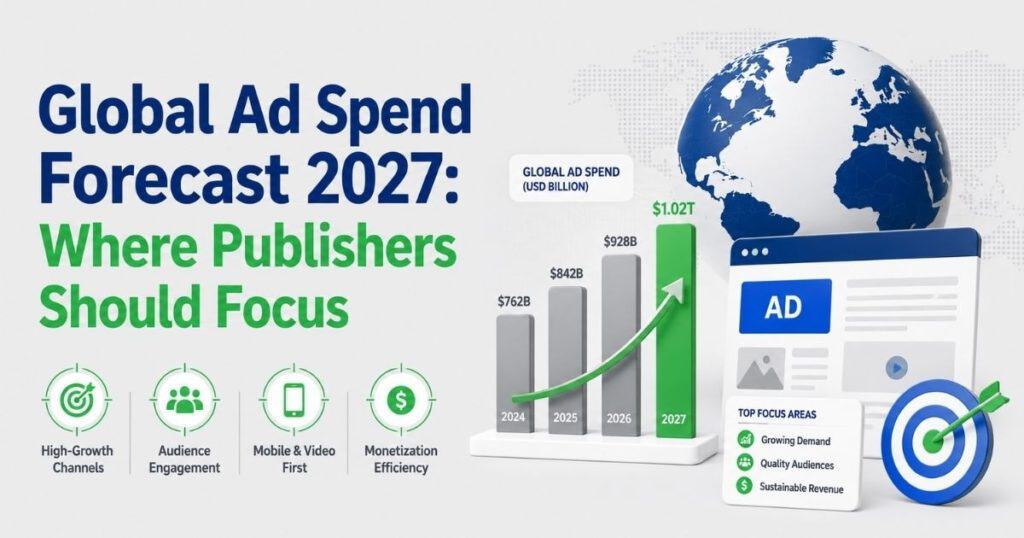
The global ad spend forecast for 2027 points to another year of advertising growth. However, publishers need to look beyond the headline numbers. The bigger story is where advertiser budgets are moving. Digital video, connected TV, commerce-led media and increasingly automated buying are changing how publishers can compete for advertising revenue.
Therefore, 2027 will be less about generating more impressions and more about making every impression easier to buy, measure and monetise.
| Quick Summary: Global ad spend is expected to keep rising in 2027, led by digital, CTV, video, retail media and algorithmic buying. Publishers should focus on stronger demand competition, first-party audience data, premium inventory, faster ad delivery and yield optimisation to capture more advertiser budgets and protect sustainable long-term publisher revenue growth. |
Key Takeaways
- Global ad spend is expected to continue growing in 2027.
- Digital, CTV, video and retail media will lead growth.
- Algorithmic buying will influence more advertising decisions.
- Publishers need stronger demand competition and first-party data.
- Yield optimisation will matter more than impression volume alone.
What Is the Global Ad Spend Forecast for 2027?
The short answer is: global advertising spend is expected to continue growing in 2027, although forecasts differ depending on methodology and market coverage.
Dentsu’s May 2026 forecast expects global advertising spend growth to move from 5.8% in 2025 to 5.0% in 2026 and 5.5% in 2027. Even with economic uncertainty, advertising is expected to outperform the wider economy; the same report cites an IMF projection of 3.1% global GDP growth for 2026.
The World Advertising Research Center (WARC) is more bullish. Its December 2025 forecast placed the global advertising market at approximately $1.19 trillion in 2025, after 8.9% growth. It projected another 9.1% increase in 2026 and 7.9% growth in 2027, taking global advertising investment to roughly $1.4 trillion.
Different numbers, same message: advertiser demand is still expanding.
Why Do 2027 Ad Spend Forecasts Differ?
Publishers should not treat every global forecast as measuring exactly the same thing.
Dentsu analyses spending across 56 advertising markets and expects global expenditure to reach $1.06 trillion in 2026. WARC uses its own global advertising dataset and methodology, producing a larger market estimate.
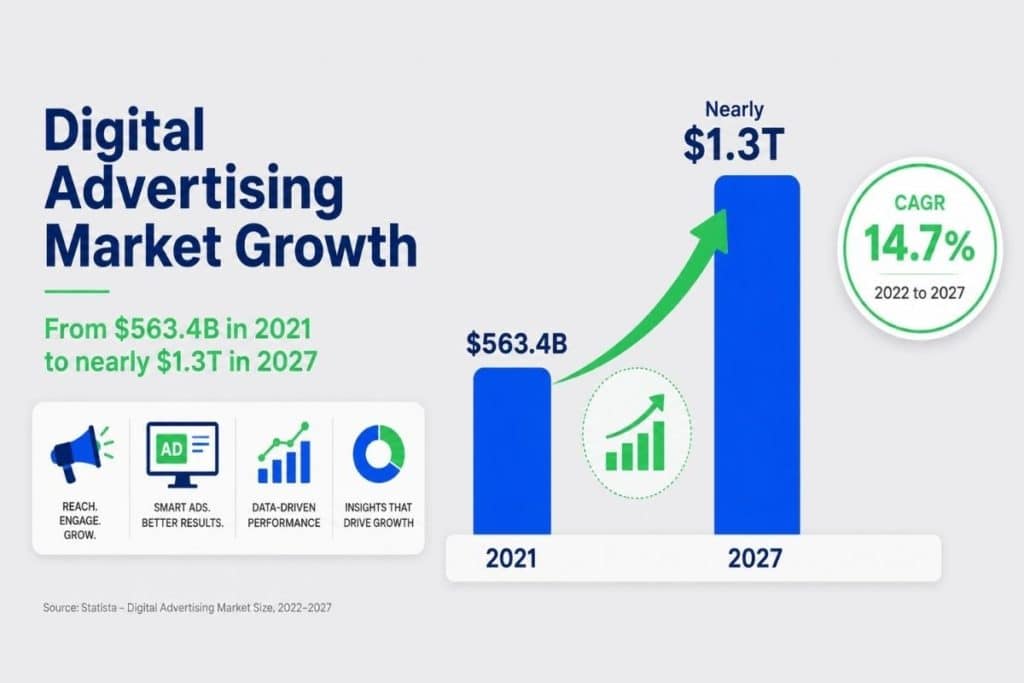
Research and Markets provides another useful longer-term benchmark. Its 2023 research estimated that the digital advertising market, specifically, would rise from about $563.4 billion in 2021 to nearly $1.3 trillion in 2027, representing a projected CAGR of 14.7% between 2022 and 2027.
These figures should therefore be read as directional rather than interchangeable.
For publishers, that direction matters most: more advertising money is becoming digital, automated and concentrated around high-value audience and content environments.
Digital Ad Spend Will Remain the Main Growth Engine
The digital ad spend forecast 2027 gives publishers one of the clearest signals about where to focus.
Dentsu says digital already represents approximately 69% of advertising spend across the markets it analyses. The fastest-growing areas include retail media, connected TV and video, social media and digital out-of-home.
That means simply having digital inventory is no longer enough.
Publishers need inventory that advertisers can efficiently discover, evaluate and buy through modern programmatic channels. Improving viewability, audience signals, contextual relevance, page experience, and auction competition will become increasingly important to publisher ad revenue.
The opportunity is moving from more inventory to more valuable inventory.
CTV and Video Should Move Higher on Publisher Roadmaps
One of the most important programmatic advertising trends in 2027 is the continued shift toward video.
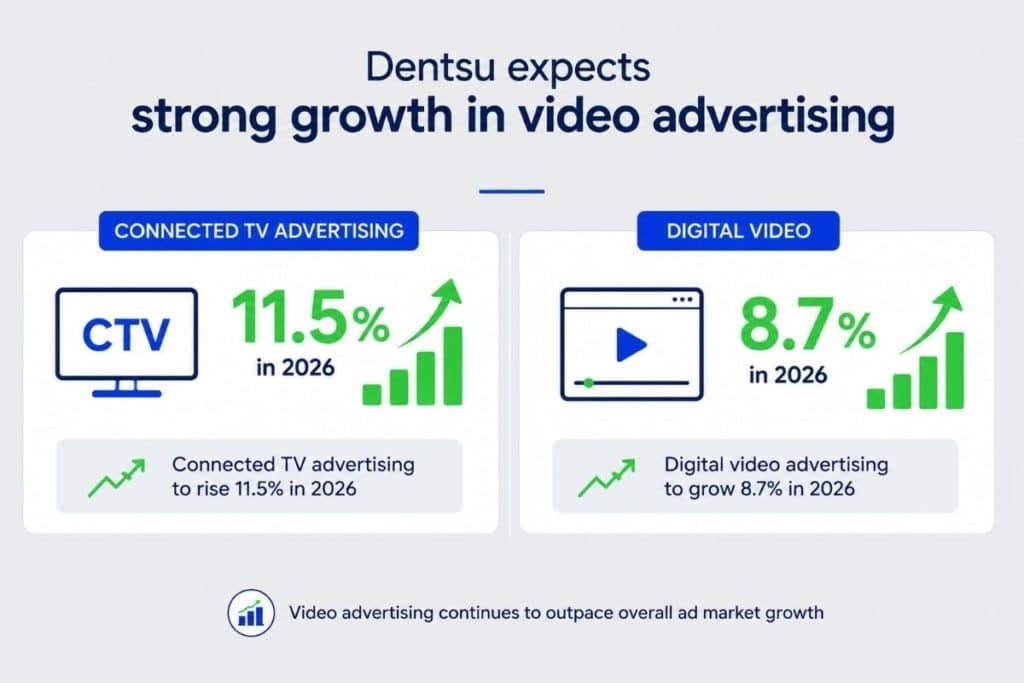
Dentsu expects connected TV advertising to rise 11.5% in 2026, while digital video grows 8.7%. By comparison, linear television is forecast to remain flat. The growth is being supported by premium content, sports and expanding ad-supported streaming models.
For publishers with strong video libraries or streaming audiences, CTV advertising growth creates opportunities to develop:
- premium video inventory
- connected TV monetisation
- programmatic video auctions
- audience-based video packages
- brand-safe, high-attention environments
Publishers without a video strategy should at least evaluate whether their content and audience can support one. Advertiser demand is increasingly following attention across screens rather than remaining tied to traditional display formats.
Retail Media Is Changing What Counts as Valuable Publisher Data
Another major shift comes from retail media advertising.
Dentsu expects retail media to maintain double-digit momentum, growing 12.3% in 2026 and 11.4% in 2027. WARC has separately projected global retail media investment of $196.7 billion in 2026.
The lesson for publishers extends beyond retailers.
Advertisers increasingly value media environments that connect audience behaviour, content context and purchase intent. Publishers with strong first-party relationships can use registration data, content interests and behavioural signals to build more meaningful audience segments.
This makes first-party data not just a privacy asset, but a monetisation asset.
Algorithmic Advertising Will Change How Inventory Competes
Automation is also moving deeper into media buying.
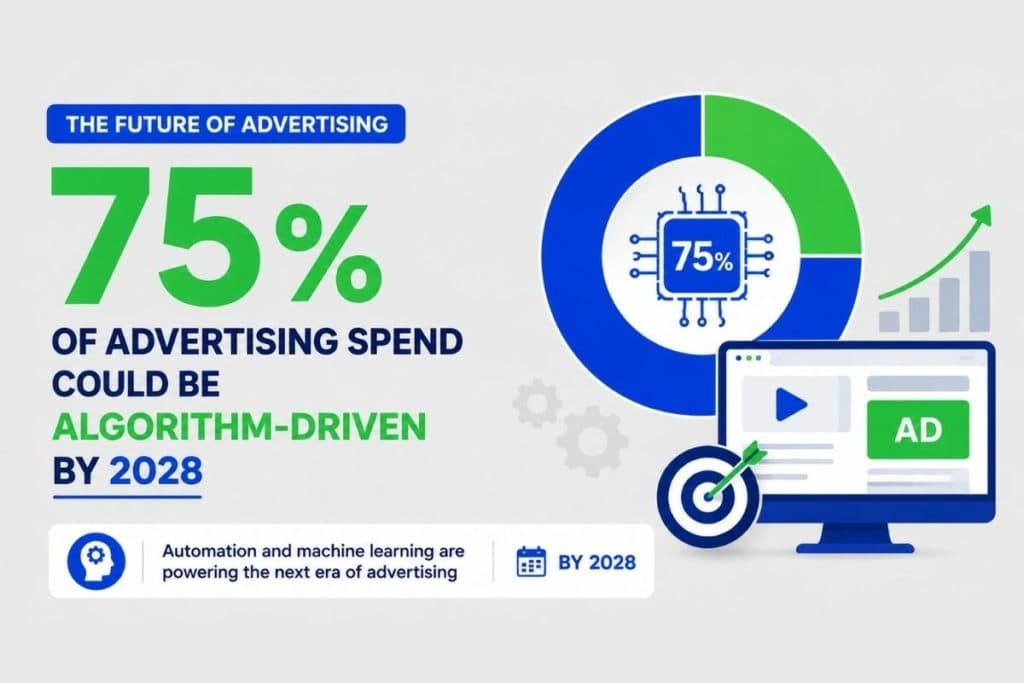
Dentsu forecasts that approximately 75% of advertising spend could be algorithm-driven by 2028, meaning algorithms will play a significant role in deciding how media is purchased.
For publishers, algorithmic advertising raises the importance of clean signals.
Algorithms evaluate factors such as inventory quality, audience relevance, price, viewability, and predicted performance at enormous scale. Poorly structured inventory can therefore lose auctions before a human buyer ever evaluates it.
A stronger publisher monetization strategy for 2027 should focus on making inventory more competitive programmatically through accurate signals, efficient ad serving, strong auction dynamics, premium demand access and continuous yield optimisation.
Automation does not remove the need for publisher strategy. It makes good strategy easier to reward and weak setups easier to expose.
Publishers Need More Competition for Every Impression
There is also a warning hidden inside the growth forecasts.
WARC says much of the advertising market’s expansion between 2025 and 2027 is expected to be captured by Alphabet, Amazon and Meta. It has described the market’s recent growth as increasingly concentrated within large technology platforms.
Independent publishers therefore cannot assume that rising global advertising spend 2027 will automatically translate into rising revenue.
They need to compete for it.
That means reducing unnecessary dependence on individual demand channels, increasing competition between buyers, improving fill without sacrificing yield, and ensuring premium inventory can reach multiple sources of quality demand.
The objective is not simply a higher CPM or fill rate in isolation. It is finding the combination that generates the strongest sustainable revenue from each audience and inventory segment.
Where Should Publishers Focus in the Global Ad Spend Forecast for 2027?
Based on current forecasts, five areas deserve priority:
Strengthen Programmatic Demand Competition
Publishers should increase competition for every available impression by connecting inventory to multiple quality demand sources. A diversified demand setup can reduce dependence on a limited buyer pool and improve opportunities for higher bids. The priority should be creating efficient competition without adding unnecessary complexity, latency or low-quality demand.
Expand Video and CTV Capabilities
Video and connected TV continue to attract growing advertiser investment. Publishers with suitable content and audiences should explore premium video inventory, in-stream opportunities and CTV monetisation. High-quality video environments can attract stronger advertiser demand, particularly when combined with reliable measurement, brand safety and engaged audiences.
Build Usable First-Party Audience Intelligence
Collecting first-party data is only valuable when publishers can activate it. Behavioural signals, content interests, registration data and contextual information should be transformed into meaningful audience segments. These segments can help advertisers reach relevant users while giving publishers opportunities to package and monetise differentiated inventory.
Optimise Inventory for Algorithmic Buying
As automated decision-making becomes more influential, publishers need inventory that algorithms can accurately evaluate. Improving viewability, latency, auction configuration, pricing and signal quality can strengthen inventory competitiveness. Cleaner signals and efficient ad delivery can also reduce the risk of valuable impressions being undervalued.
Measure Yield, Not Just Volume
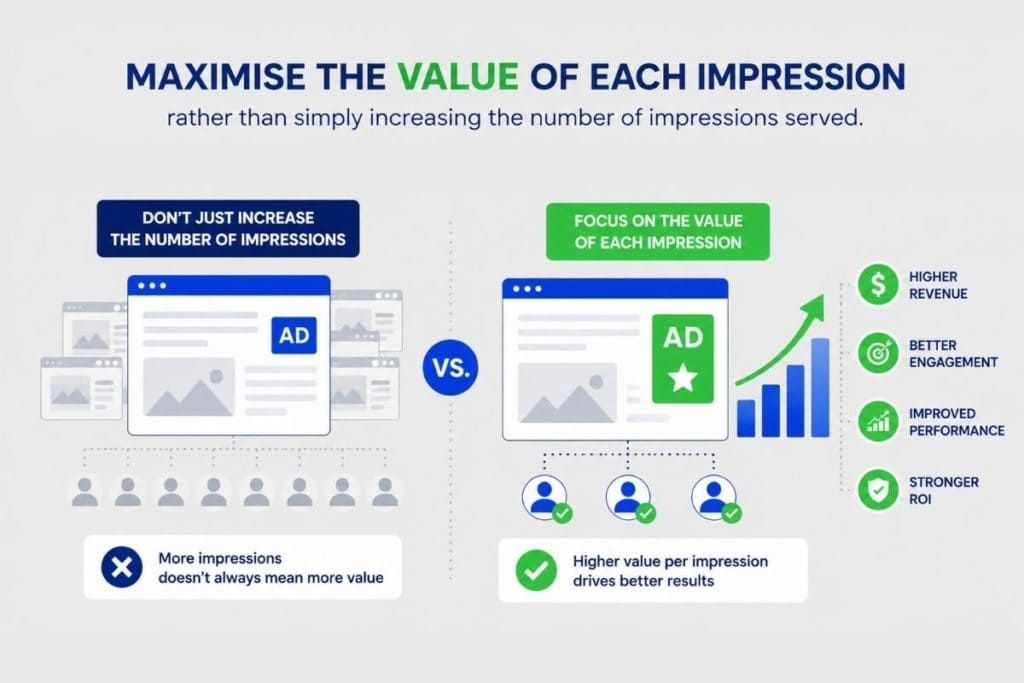
Publishers should look beyond impressions and traffic when judging monetisation performance. Revenue per session, viewability, fill rate, eCPM, latency and demand-source performance should be analysed together. A smaller volume of well-monetised inventory can often generate more value than a larger number of poorly optimised impressions.
For publishers responding to the global ad spend forecast 2027, the goal should be clear:
Final Thoughts: Ad Spend Is Growing, but Publishers Still Have to Win It
The global ad spend forecast 2027 gives publishers plenty of reasons to be optimistic. Advertising investment is growing, digital continues to gain share and emerging channels are creating new monetisation opportunities.
But market growth does not guarantee publisher growth.
The publishers most likely to benefit will be those that make their inventory easier to value, easier to buy and more competitive across premium programmatic demand.
Want to turn growing advertiser demand into stronger publisher revenue?
Explore Auxo Ads and build a smarter monetisation strategy around better demand competition, ad stack efficiency and data-driven yield optimisation.
Don’t Just Follow AdTech Trends. Monetise Them.
The advertising market changes quickly. Your revenue strategy should keep up.
Visit the Auxo Ads Blog and subscribe to the newsletter for publisher monetisation insights, programmatic advertising trends and practical strategies designed to turn industry shifts into revenue opportunities.
The next advertising trend is already forming. Make sure it reaches your inbox before it reaches your revenue report.
Frequently Asked Questions
1. What is the global ad spend forecast for 2027?
Global advertising spend is expected to keep growing in 2027, with Dentsu forecasting 5.5% growth and WARC projecting 7.9%, reflecting different methodologies, market coverage, assumptions and datasets worldwide today too.
2. Which advertising channels should publishers prioritise in 2027?
Publishers should prioritise CTV, digital video, retail media, programmatic demand and high-quality audience data because these areas are attracting stronger advertiser investment and creating better monetisation opportunities globally overall today.
3. Why is programmatic advertising important for publishers in 2027?
Programmatic advertising helps publishers increase demand competition, improve yield and monetise inventory efficiently. As algorithmic buying expands, clean signals, strong auction setups and quality inventory become increasingly important overall today.
4. How can publishers increase ad revenue in 2027?
Publishers can increase revenue by improving viewability, reducing latency, expanding premium demand access, strengthening first-party data, optimising auctions and tracking yield metrics instead of focusing only on impression volume alone.
5. How will algorithmic advertising affect publisher monetisation?
Algorithmic advertising will increasingly determine which inventory wins advertiser budgets. Publishers need accurate audience signals, efficient ad delivery, competitive pricing and strong inventory quality to perform better in automated auctions.







[340223]supplies professional anti-violence equipments and solutions for the whole world with strong and perfect production capacity. anti-violence.org
Super easy to navigate and the promotions are updated daily. It is definitely one of the most reliable sites I have used. Try ph5jljl
Finally found a place that actually pays out without a headache. The interface is very user-friendly and the games are top notch. Check out suksesjitulogin if you want a reliable experience.
Really impressed with the customer support here. They answered my questions almost instantly. Highly recommend giving bdjoya9official a shot.
Really impressed with the customer support on this site. They answered my questions in minutes. inzetto really knows how to treat their players right.
Simply the best experience I have had in a long time. The graphics are crisp and the winning streaks are real. Love 123bvvip
Top notch service and a very user-friendly layout. I had a few questions and the support team sorted me out quickly. Highly recommend bd39999bat.
A hidden gem for sure. I was skeptical at first but after a few rounds I am totally convinced. This is my new favorite spot bdgb777
This site has a very chill vibe and the promotions are updated daily. It is a perfect way to unwind and try my luck at vnmh66.
Just had an amazing run here last night. The variety of games is insane and the support team is very helpful. braffun is where the real fun is at.
[3902]33ww | Link vào trang chủ và tải app game nổ hũ đổi thưởng,33ww cung cấp link vào trang chủ chính thức để tải app nhanh chóng. Khám phá cách chơi baccarat online và nạp tiền casino qua momo tiện lợi. Tham gia ngay! visit: 33ww
Customer support is actually helpful and quick to respond to my queries. Great service from phcahph.
I’ve tried a few platforms lately but this one is surprisingly smooth. The interface is very intuitive and the payouts are fast. Definitely worth a go! Check out pj777app
I’ve tried a lot of sites but this one stands out for its transparency and speed. Everything is handled professionally at bd3999bed.
Installing the app made everything so much easier. No more refreshing the browser, just instant access to the games. Love using bdr777betapk on my phone.
I joined mainly because of the welcome bonus and stayed for the consistent quality. Every promotion here comes with clear terms and the wagering requirements are actually reasonable. My bankroll lasts much longer and I feel respected as a loyal member. Keep up the amazing work. brazino777chile
I love how easy it is to navigate through the different categories. It makes the whole experience much more enjoyable. Big thanks to vny088 for the great service.
Great platform with very fair odds. I appreciate the transparency and the quick customer support. krikia11 is a winner.
Best platform for local players in the Philippines. It feels tailored to our needs and the bonuses are legit. Big thanks to 77jiliph for the awesome setup.
Finally found an app that doesn’t lag during the big wins. The installation was a breeze and the game variety is top notch. Highly recommend for mobile players. Visit pkwa777gameapk